

Waiakea High School School Improvement Status
Summary of Progress
In 2023-24, Waiākea High went through a full accreditation process and was granted a six-year accreditation status.
Waiākea High has steadfastly maintained its purpose as an academy school for numerous years, guided by the leadership of a single principal for over 15 years. This prolonged period of stability has afforded the school the opportunity to embrace the National Career Academy Coalition (NCAC)’s National Standards of Practice (NSOPs) as the foundational framework for continuous improvement. Adopting the NSOPs as a guide facilitates an ongoing process of reflection and enhancement, subjecting each academy to a rigorous national review by the NCAC. Remarkably, since 2019, all five academies within Waiākea High have successfully completed the NCAC review and certification process
with most of them earning model status.
The 10 National Standards of Practice are:
- NSOP 1 Mission and Goals. The career academy has a written mission, goals, and benchmarks. These are
developed, reviewed, available, and known by the administrators, teachers, students, parents, advisory board, and others involved in the academy. These include at least the following elements: connect postsecondary education and career; raise and maintain student aspirations; increase student achievement; show a commitment to equity. - NSOP 2 Academy Design. An academy has a well-defined structure within the high school, reflecting its status as a small learning community.
- NSOP 3 Host Community and High School. Career academies exist in a variety of district and high school
contexts, which are important determinants of an academy’s success. - NSOP 4 Faculty and Staff. Appropriate staff selection, leadership, credentialing, and cooperation are critical to
an academy’s success. - NSOP 5 Professional Development and Continuous Learning. Since an academy places teachers and other adults into roles not normally included in their previous training, providing adequate professional development
time, leadership, and support is critical. - NSOP 6 Governance and Leadership. The academy has a governing structure that incorporates the views of all stakeholders and the leaders of the advisory board.
- NSOP 7 Teaching and Learning. The teaching and learning within an academy meet or exceed external
standards and postsecondary entrance requirements while differing from a comprehensive high school by
focusing learning around a career theme. - NSOP 8 Employer, Postsecondary Education, and Community Involvement. A career academy links high school to its host community and involves members of the employer, postsecondary education, and civic community in certain aspects of its operation.
- NSOP 9 Student Assessment. Improvements in student performance are central to an academy’s mission. It is
important to gather data that reflect whether students are showing improvement and to report theseaccurately
and fairly to maintain the academy’s integrity. - NSOP 10 Sustainability. No new academy functions perfectly. Even well established and highly functioning
academies benefit from self-examination and refinement. Ensuring and improving the quality of a career academy requires engaging in a regular cycle of improvement.
In 2023-24, Waiākea High continued its participation in Hawai’i Academies, a consortium of public high schools in the State of Hawai‘i that supports the Smaller Learning Communities (SLC) design of the school. Waiākea hosted a number of events and visits from other schools to share its efforts towards the academy model. The presentations and reflections of a group of trained Waiākea Student Ambassadors were a highlight of these events.
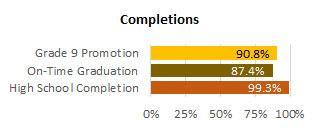
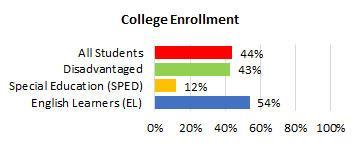
| STUDENT COMPLETIONS | |
 |
 |
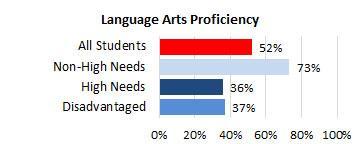
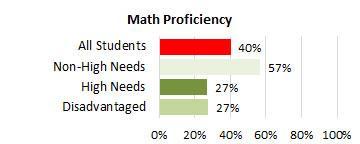
| STANDARDIZED TEST PROFICIENCY | |
 |
 |
 |
|
 |
 |
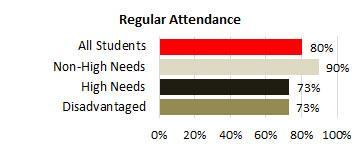
| STUDENT ATTENDANCE AND PERFORMANCE | |
 |
 |
 |
 |
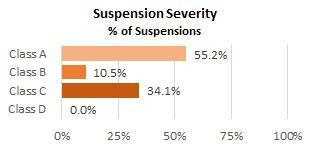
| STUDENT BEHAVIOR* | |
 |
 |
 |
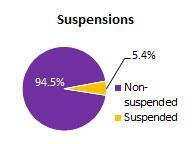
* Suspension severity represents percentage of suspensions. |

|
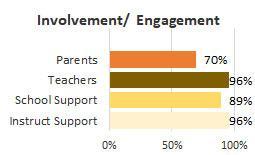
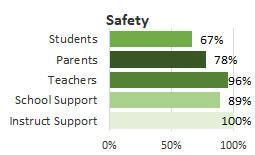
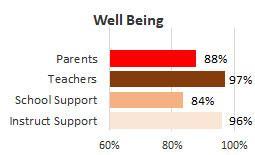
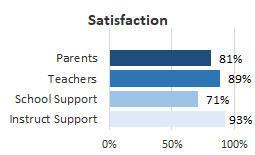
SCHOOL CLIMATE
% Positive Responses
|
 |
 |
 |
 |